Role
Creative Director
Client
Manufacturing
Team
Executive CD
Creative Director
Visual Designer
Type
Rapid Prototyping & AI Assistant Design
We were told that the previous week, they had an alarm that resulted in a $40 million deviation.
On this shop floor, when something goes wrong, precious material is lost. The equipment is highly precise and complex. Much of it is automated, but there is still a critical role for human operators. When an error occurs, the production line is disrupted, base material is lost, and the operators race to troubleshoot.
When we heard about the night shift’s historic log, we realized they were sitting on an excellent resource for the AI assistant to learn from.
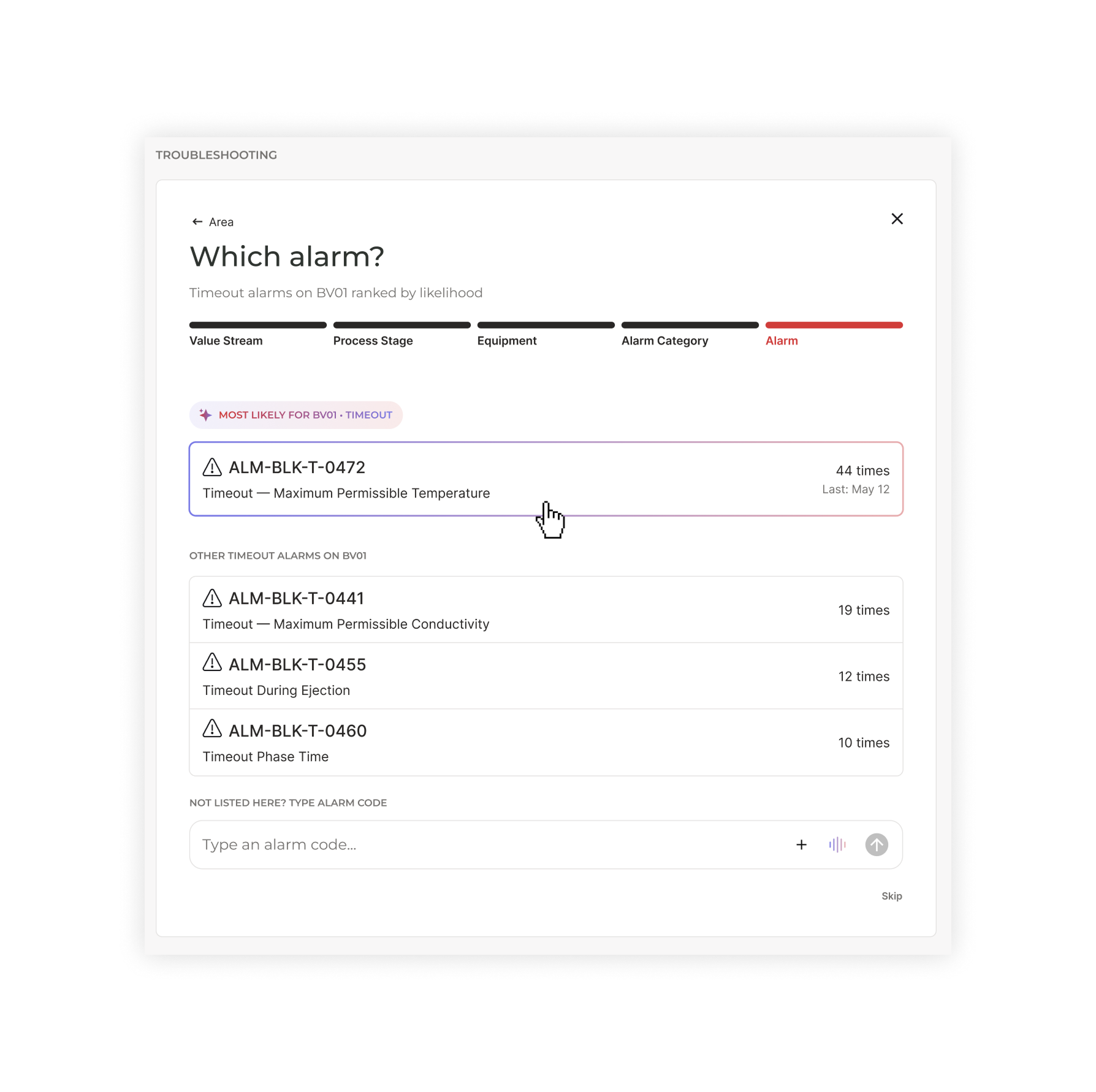
They knew that AI could help them search the Standard Operating Procedure documentation faster, but they had not considered using it to interpret the nightshift log and suggest a resolution path that is most likely to be successful.
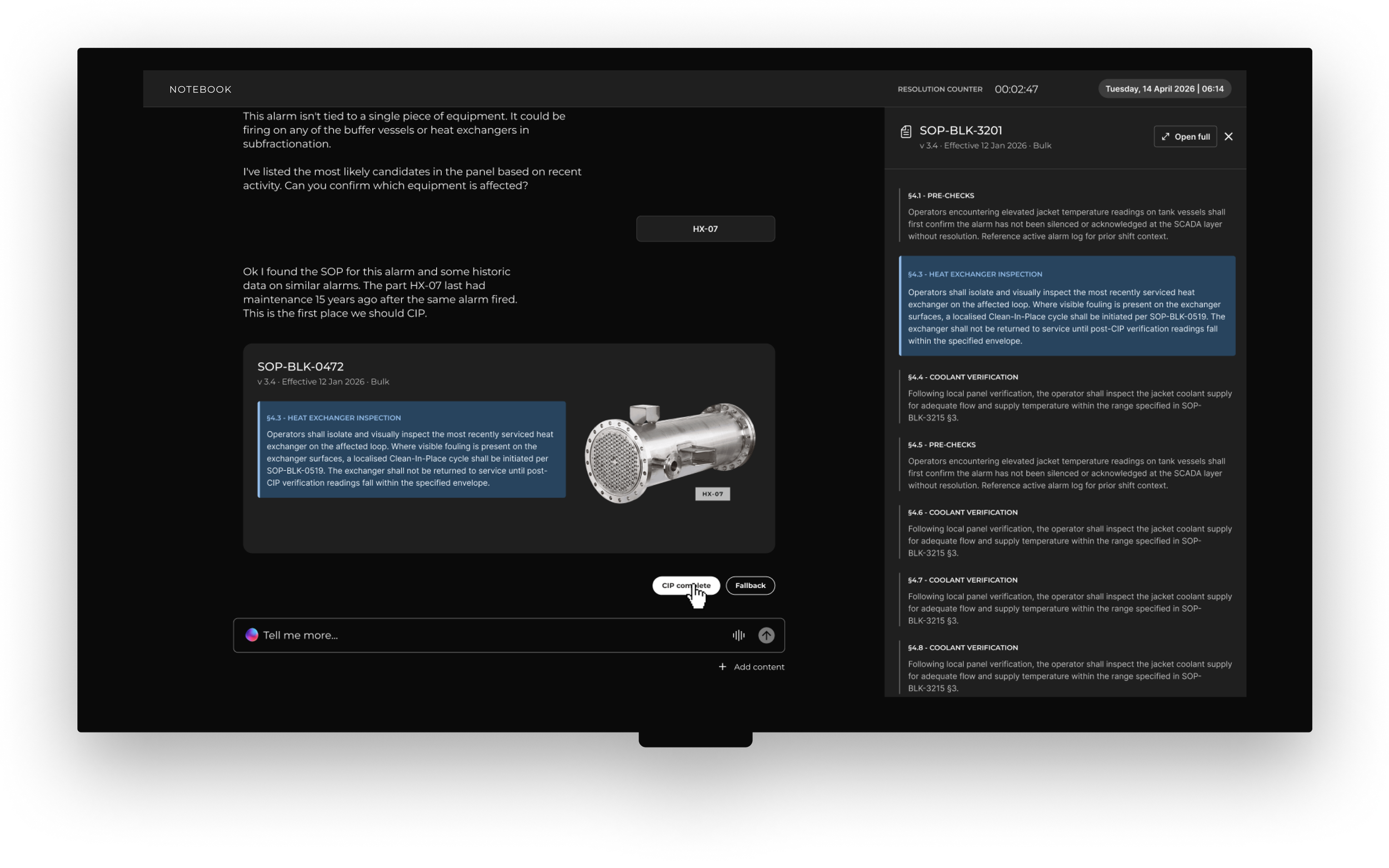
Operators are able to search and reference the source Standard Operating Procedures.
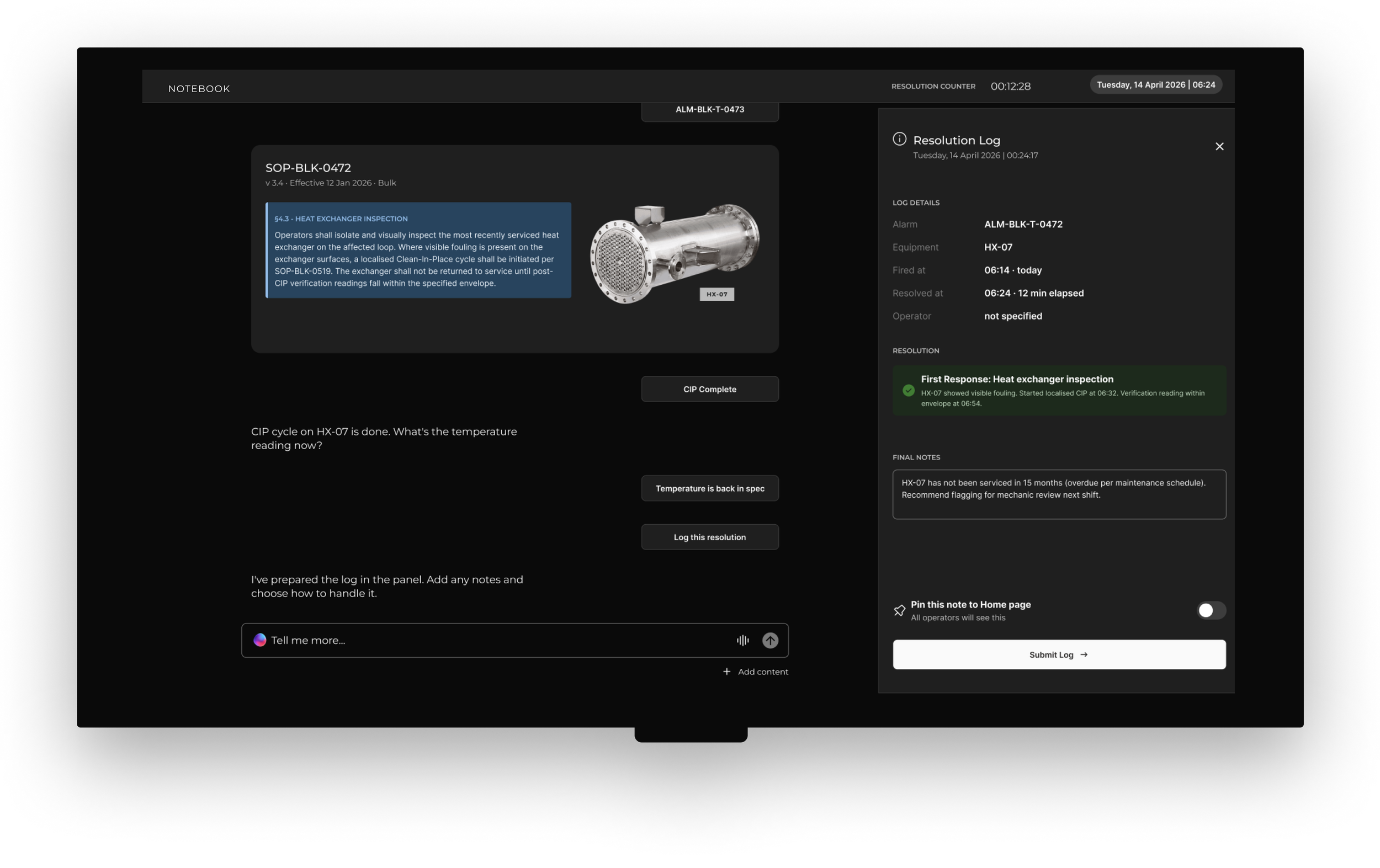
A log is auto-filled with all details of a troubleshooting session for operators to review and submit.
Not only could we make an informed suggestion about the quickest path to resolution, if we also owned the log we could solve a host of other pain points.
Sometimes an operator who had been there for 15 years would be the only person on shift who remembers the last time a rare alarm fired, and remembers which part to clean first. We designed the AI-guided troubleshooting to include and encourage notes and corrections from the operator to allow us to capture tacit knowledge from the team.
We also shifted the night shift log from an Excel spreadsheet to the AI assistant. Now, many aspects of resolution logging can be automated, like time to resolution. We can simply run a counter and pre-fill the log; an operator can correct the time if needed.
Now the log can be kept up to date with less hassle, and it can also run day and night, collecting more data and learning from each interaction.
“You have taken a loosely defined brief and produced not just good work, this is excellent work”
-From our client
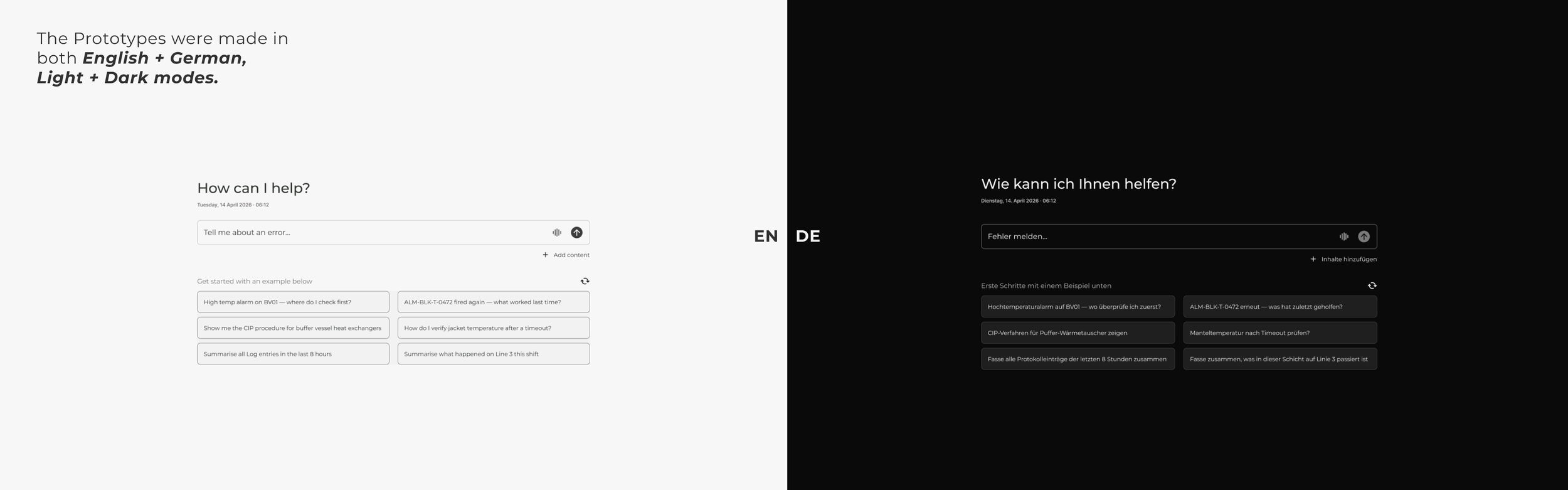
The client was super happy with this work. In the end, three senior designers produced two prototypes, in both English and German. The brief included some specifics, but they weren’t sure what exactly was possible.
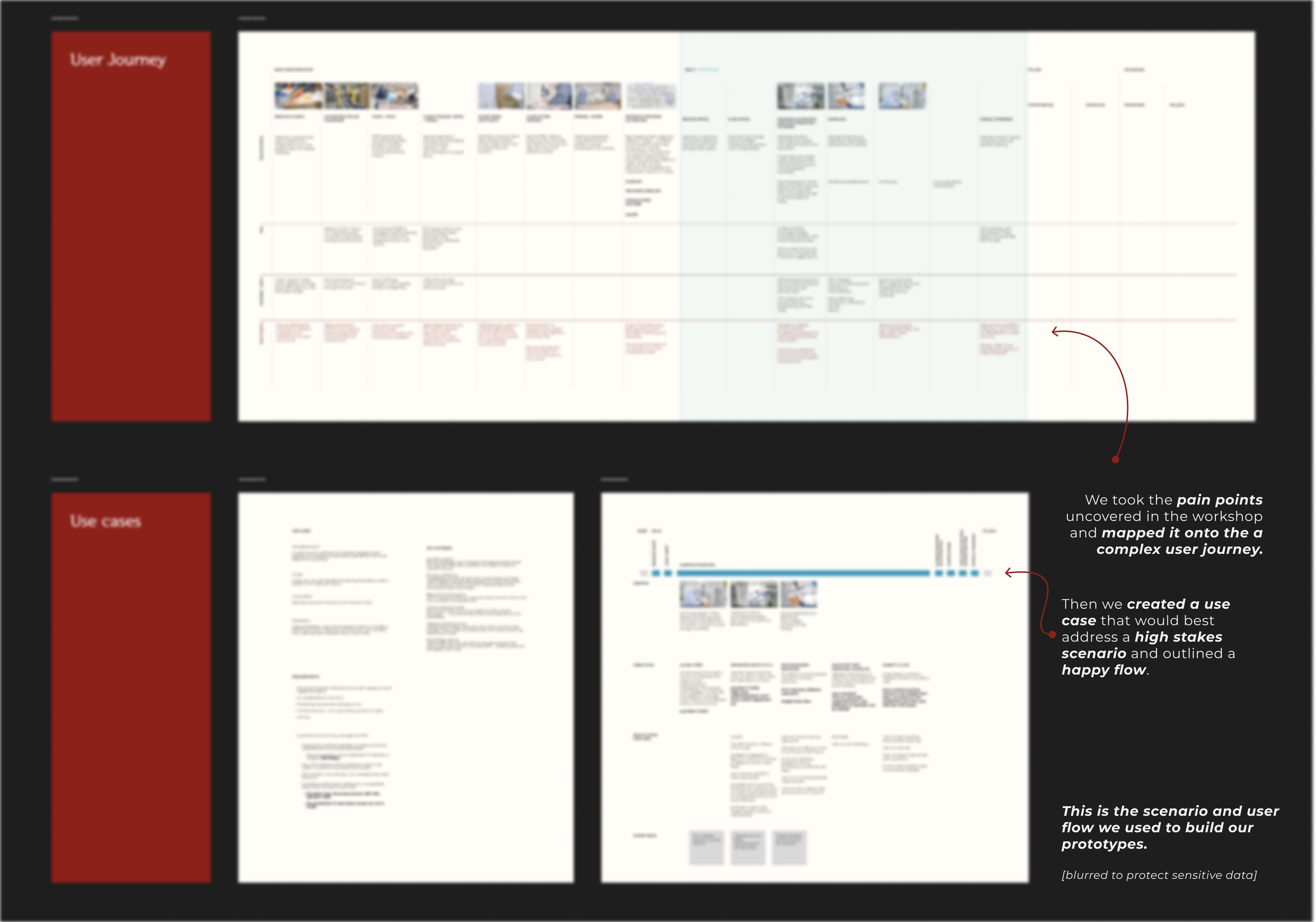
We had a dense discovery workshop document to pick through to learn about the challenges and pain points.
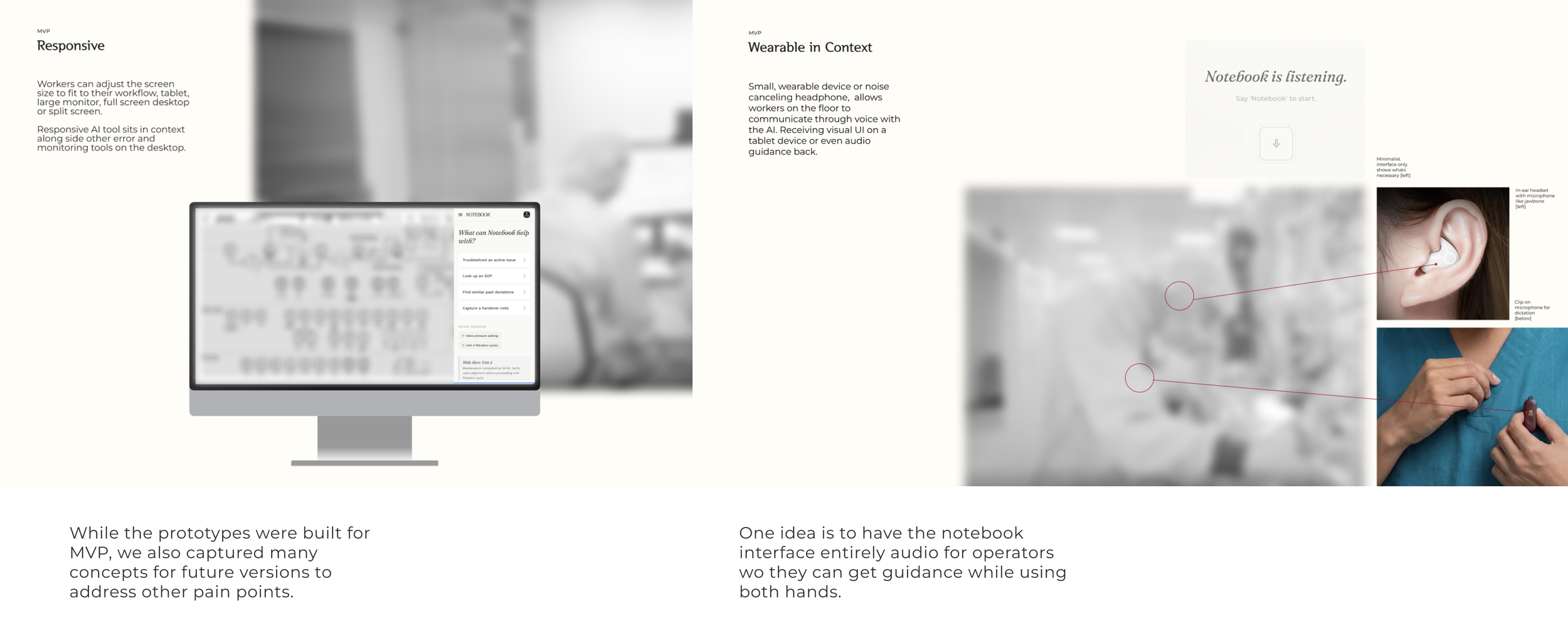
We had a clear outline of what the MVP could achieve, and we stayed within those bounds, while still capturing V2.0 concepts for reference later.
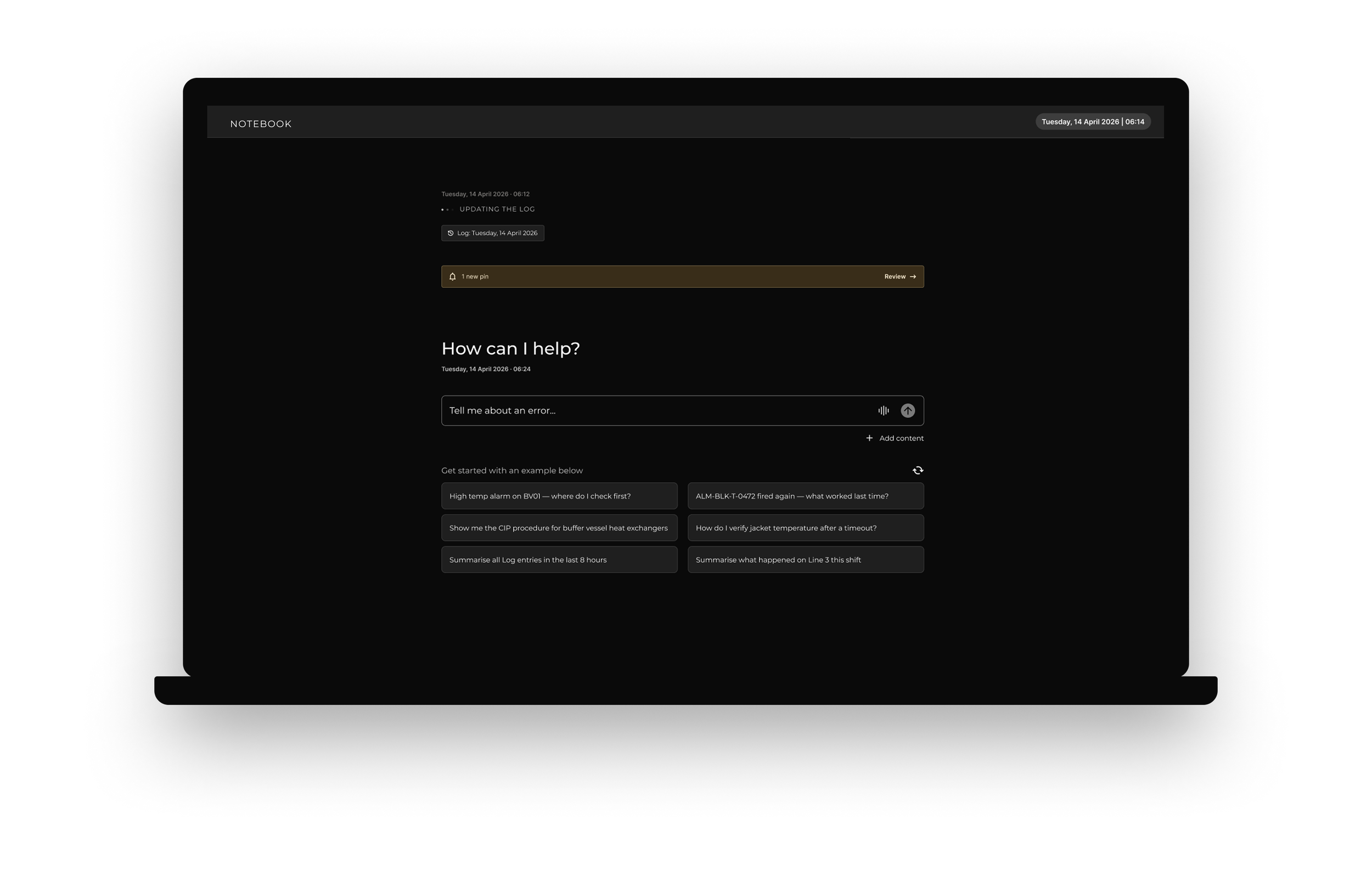
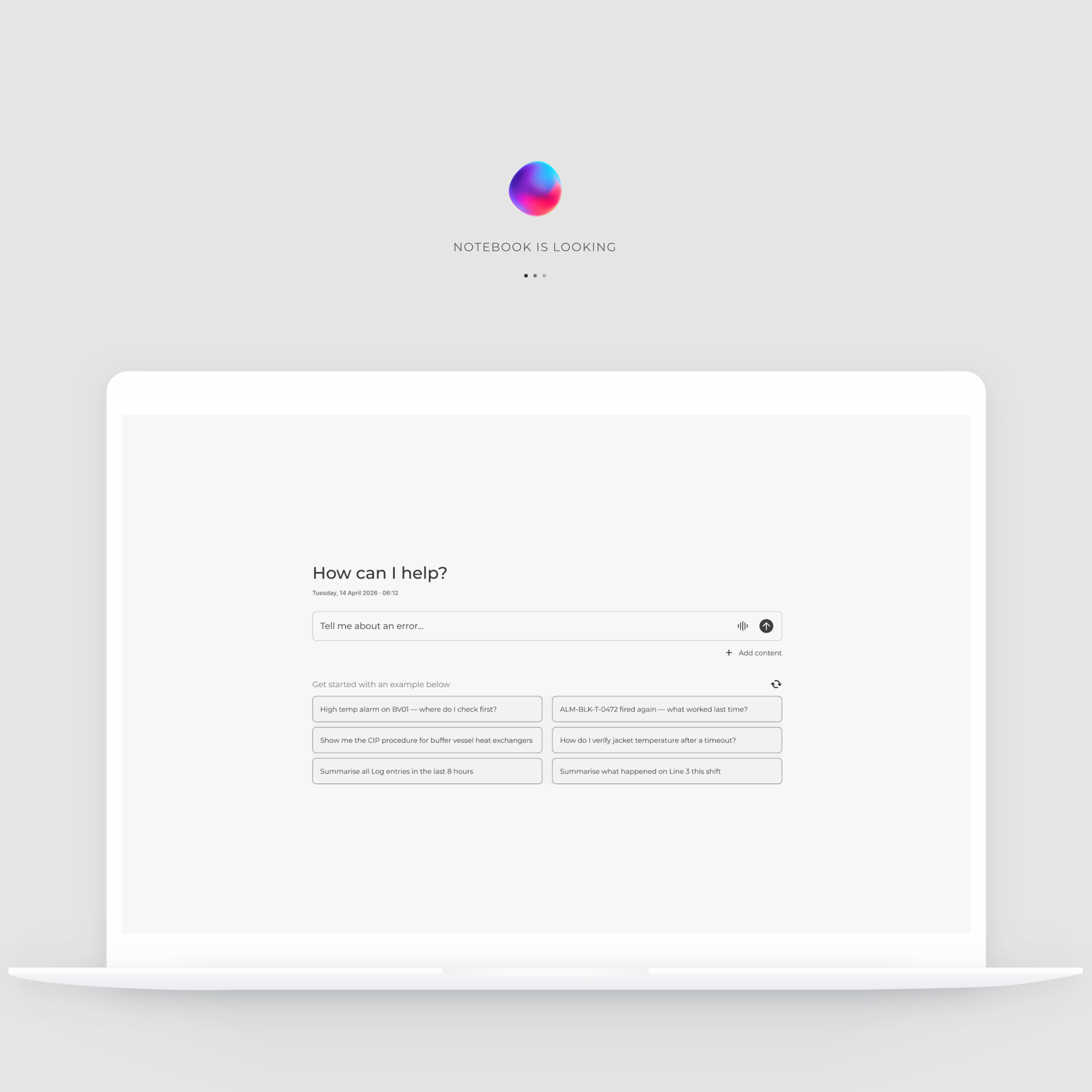
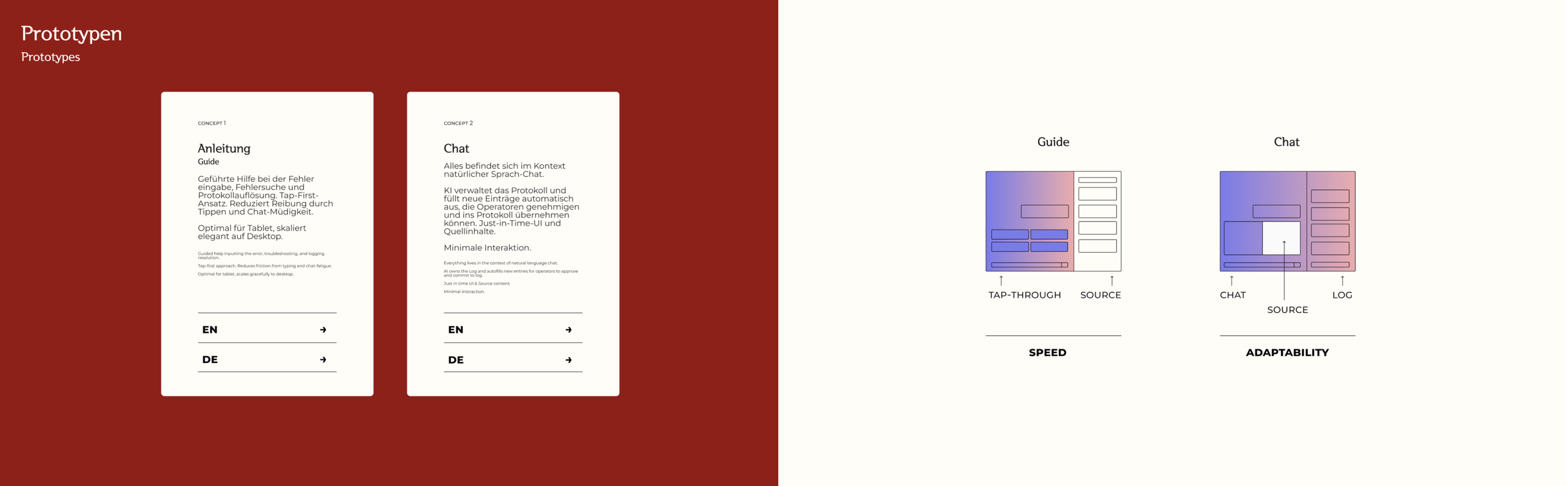
We delivered two variations on the Notebook AI concept.
One more focused on speed (to bring resolution time down) we called Guide. It had more of a click-through interface, surfacing suggested next steps and minimizing typing.
The other was more adaptable to the user input and also easier to build for MVP. This one we nicknamed Chat. It had a classic AI chat interface but still allowed for intelligent suggestions and an auto-filled log entry that slides out as a panel on the right hand side when necessary.
We completed this project in 2 weeks, 20 hrs a week.
Thanks to AI, we were able to synthesize dense technical detail quickly and to generate dummy data that worked reasonably well as a stand-in for our use case and for our users.
At our week 1 review, we already had 3 prototypes that fulfilled the requirements in the brief. Our client had no notes (very rare) and decided to take our work to the end user- the operators for their feedback, which meant we could get ahead of schedule.
Because our revision round had direct collaboration from the operators, it made the work much better and much faster. We successfully addressed all their concerns.
We also created a library of best practices to pull from for this project. This side project mitigated a lot of effort that could have been spent back and forth refining designs.
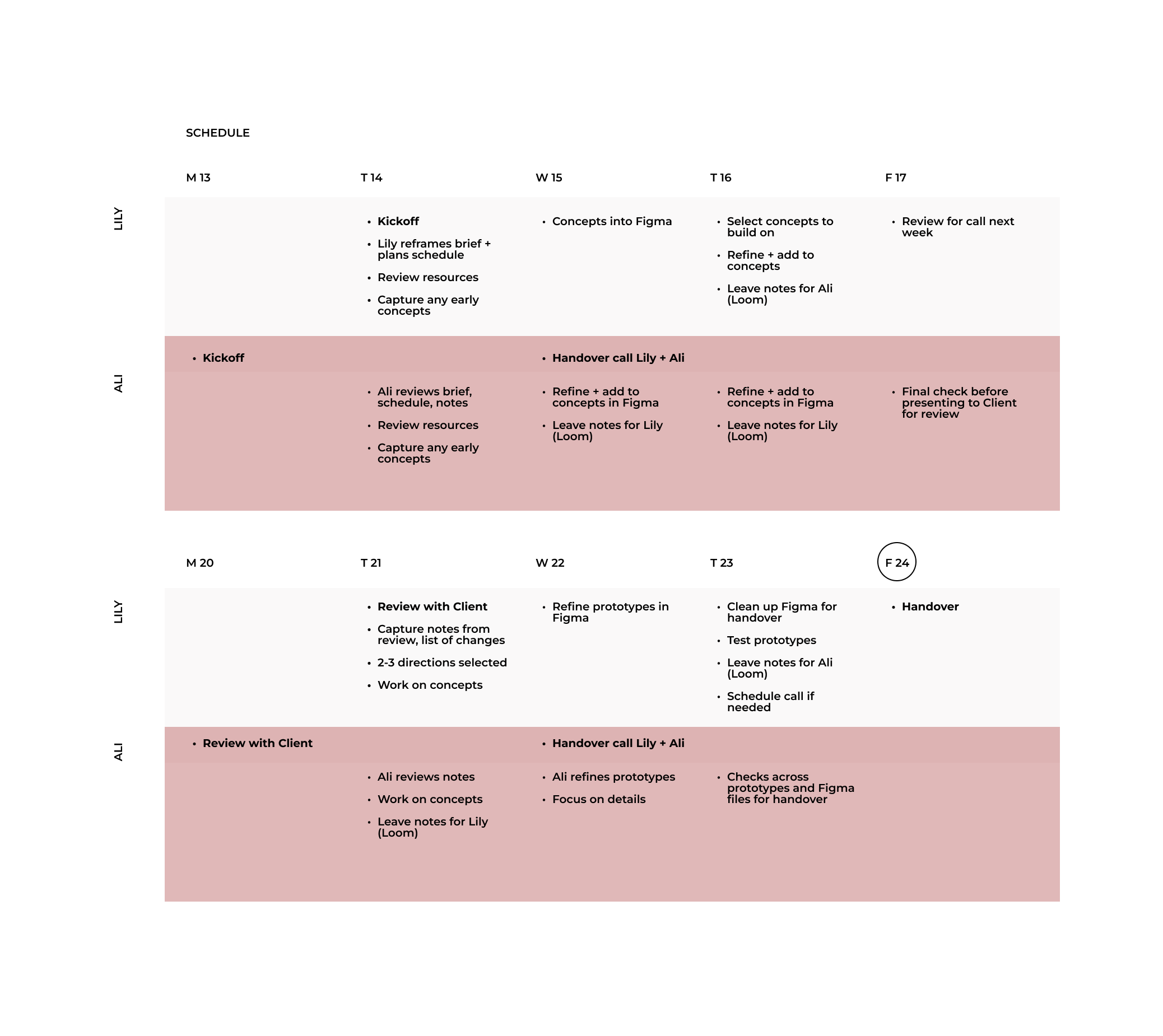
The timeline was intensely compressed, but surprisingly possible given the combined experience of the team and the adoption of new tools such as Claude Cowork and Stitch.